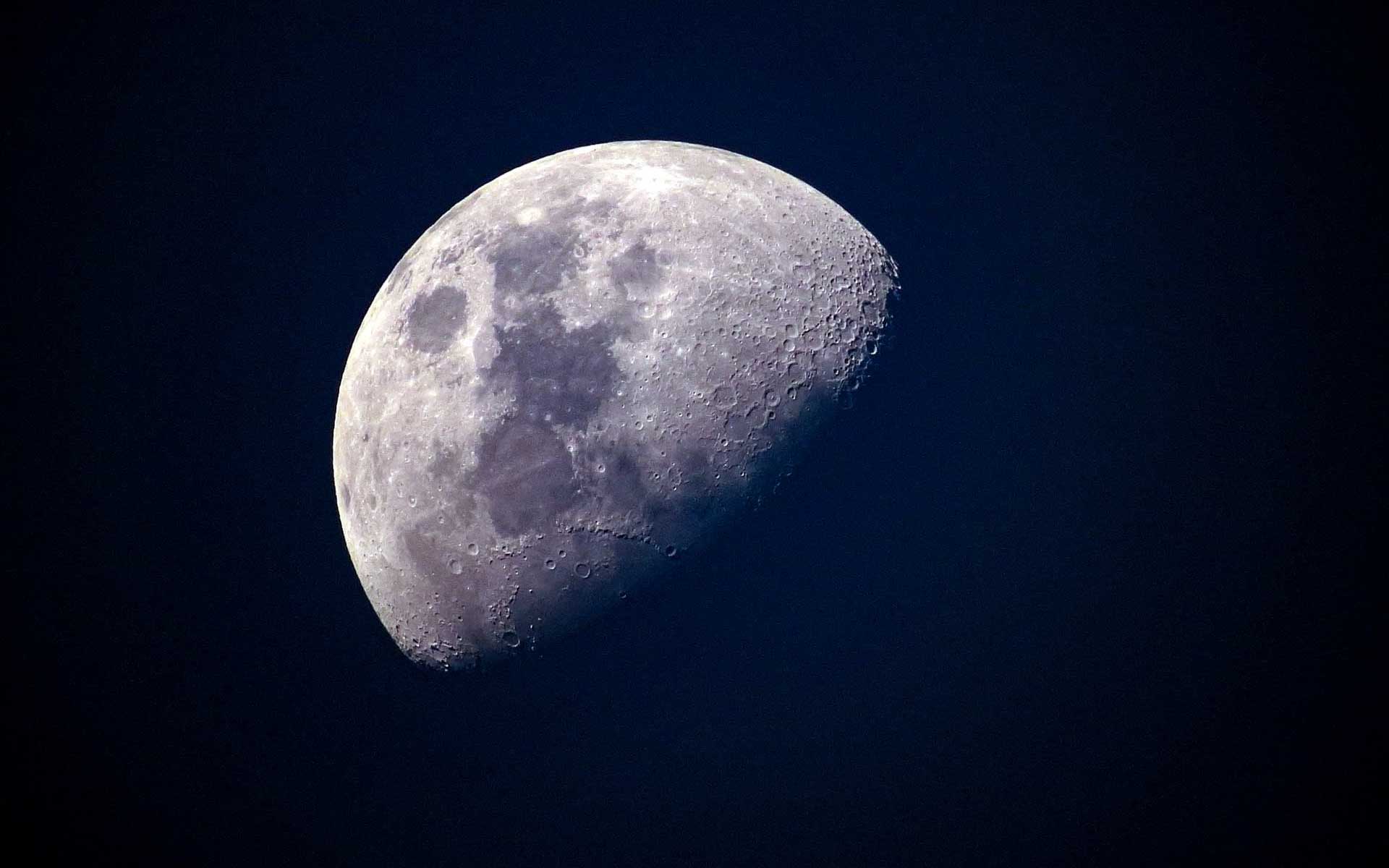
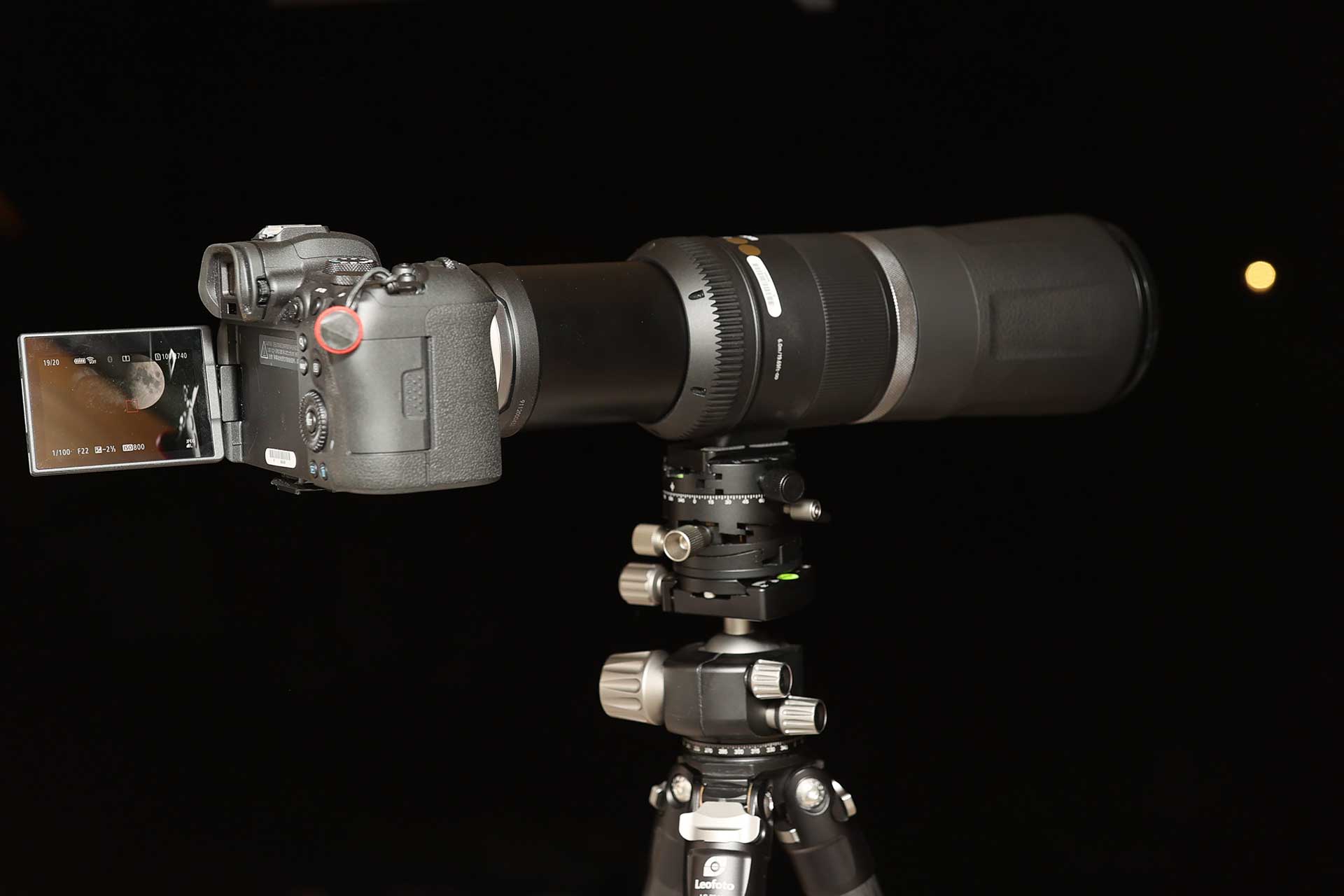
What settings should be used to take the picture? First of all, the moon is travelling faster across the sky than you might think. The shutter speed should therefore not be less than 1/250th of a second to avoid blurring caused by movement. You can control the exposure with an appropriate aperture and ISO combination.
Camera exposure meters are often unable to cope with the huge difference in brightness between the black sky and the glowing surface of the moon, so the moon will appear too bright.
So switch from automatic to manual mode, which is marked 'M' on your mode dial. ISO values between 100 and 400 and an aperture between 8 and 11 have proved to be a good starting point for exposure. You can 'play' with the combination of values, more or less, and have the result displayed in Live View or after exposure.
You can also focus manually in Live View mode. The various focus aids, such as focus peaking (magnifying a section of the image) or the focus assistants on mirrorless cameras, are very helpful here. In most cases, even the autofocus works reliably, provided that a measuring point is correctly placed on the edge of the moon.
Now, just to be on the safe side, switch off any image stabilisers (so that you are not trying to stabilise something that cannot be stabilised) and then release the shutter 'vibration-free' using a remote or timer release.
By the way, the poem by Matthias Claudius continues as follows "The forest stands black and silent, and the white mist rises beautifully from the meadows".
What the poet was probably trying to say is that the most fascinating images of the starry sky are created when you include more of the sky than 'just' the good old moon.